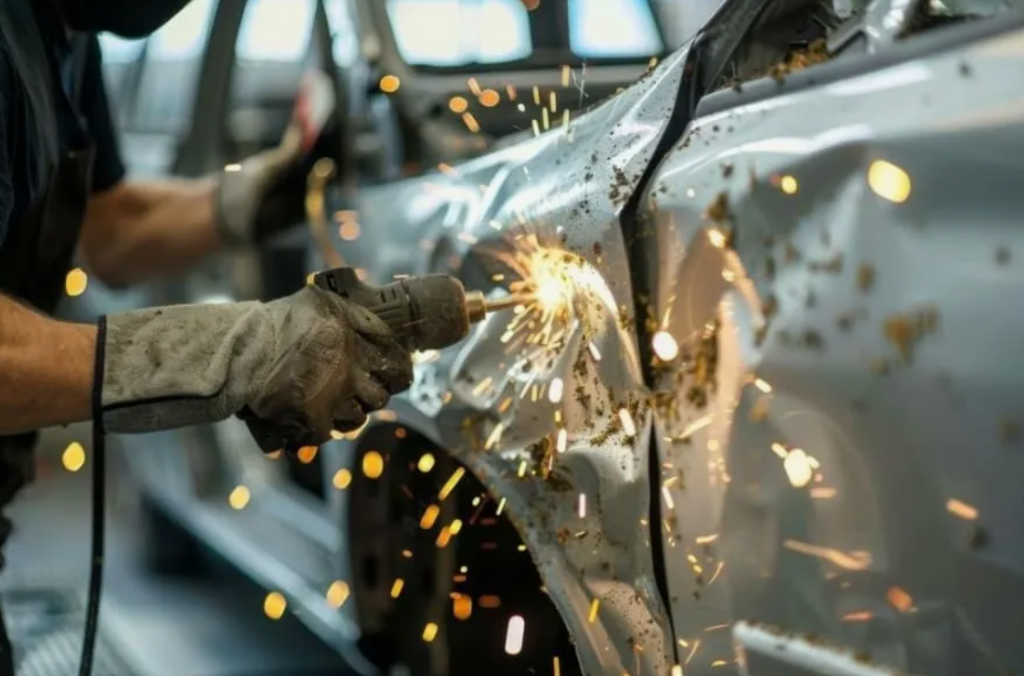
Vehicle maintenance provides the essential foundation which protects vehicle reliability and performance and safety throughout the vehicle’s entire operational life. Regular vehicle inspections, together with immediate vehicle repairs, reduce the risk of unexpected vehicle breakdowns and expensive equipment malfunctions. Drivers typically wait until their vehicles break down before they initiate repairs, but regular maintenance allows them to identify problems at an early stage. Basic car maintenance knowledge enables drivers to keep their vehicle safe for driving, while their vehicle passes both regular inspections and specialized Car Accident Repairs.
Check the engine and liquids often.
The core of your car is its engine; thus, it must be kept in pristine form. Regular fluid level inspection is among the most crucial first actions on any car repair list. Engine oil, coolant, brake fluid, transmission fluid, and power steering fluid are among these. Low or impure fluids can result in significant mechanical damage. Engine oil requires examination and replacement according to the manufacturer’s instructions at least once every month. The engine requires proper coolant levels, which need maintenance for engine temperature control purposes to prevent overheating. The fluids should be tested regularly because this practice enables you to identify potential issues before they escalate into expensive repair needs.
Tire Condition Assessment.
The one component of the car that contacts the road is the tyres; hence, they are vital for safety and handling. The maintenance of tyres needs to include tread depth measurement, air pressure assessment and overall condition inspection. Slippery conditions produced by the worn tyres reduce grip and raise the possibility of blowouts and poorer fuel economy as the tyres are unable to retain correct pressure. Drivers should turn their tyres to get more even tyre wear between 5,000 and 8,000 miles, therefore increasing the life span of their tyres. Because these flaws may point to alignment or suspension issues, the observer must hunt for fractures and holes in addition to irregular wear patterns.
Check the braking mechanism.
Safe driving requires drivers to have effective brakes. The brake system needs assessment through brake pad and rotor and brake fluid inspections, which should occur at regular intervals. Braking problems, which create vibrations and squealing sounds and grinding noises, will indicate broken rotors and worn brake pads. The braking system alerts through these warnings because, without notice, drivers will experience vehicle braking problems, which lead to expensive repairs. Regular brake checks support road safety while preserving braking performance for both drivers and their passengers.
Analyse Lights and Electric Components.
All roads require vehicle light systems and electrical systems to deliver essential visibility and communication systems for drivers. Drivers should verify their headlights and brake lights, turn indicators and hazard lights to confirm that all lights function correctly. The inspection process requires testing three vital electrical components, which are the battery, alternator, and starter, together with testing the lighting systems. Starting the automobile could be difficult with a low battery; a damaged alternator would prevent the battery from recharging sufficiently. Protection of electrical systems through proper maintenance will decrease breakdown incidents which occur unexpectedly.
Evaluate belts, hoses and filters.
The operation of your car depends on belts and hoses because these small parts become essential for maintaining performance. The parts will develop engine overheating and mechanical failures because they can shatter, become loose, or degrade over time. The inspector should search for signs of wear and damage which affect the radiator hoses, timing belt, and serpentine belt. Engine repairs become expensive when drivers notice their equipment has stopped working, because drivers can avoid these issues through the scheduled replacement of their worn belts and hoses. Engine performance depends on machines which require regular air filter and fuel filter replacements to ensure proper airflow.
Conclusion
The best method to maintain vehicle performance and safety requires drivers to follow a complete car maintenance checklist. The regular inspection of engine components, together with tyres, braking system, electrical system, belt system and suspension system components, allows technicians to detect system faults before they become serious problems. Drivers who practice regular maintenance and fast problem resolution will achieve two benefits, which include extending their vehicle lifespan and driving with improved safety and reliability.