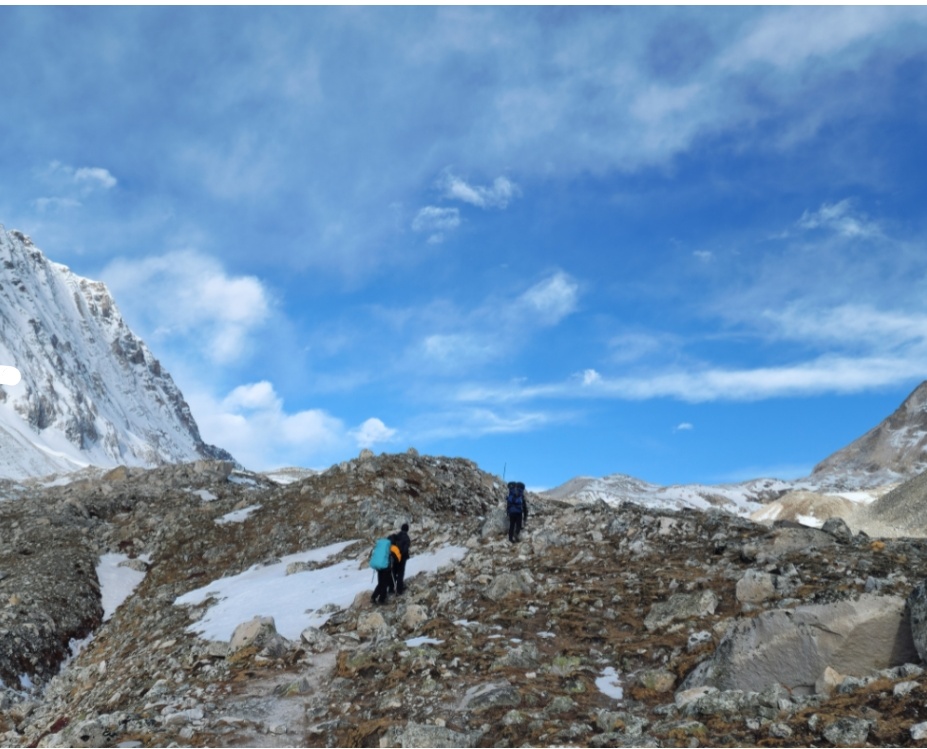
For many trekkers, disconnecting from daily life is one of the greatest rewards of trekking in the Himalayas. But for others, staying connected is important, whether it’s checking in with family, sharing photos on social media, working remotely, or monitoring the weather.
A common question before trekking in Nepal is, “Will I have internet and a mobile network on the trail?”
The short answer is yes, but not everywhere and not all the time.
Both the Manaslu Circuit Trek and the Everest Base Camp Trek offer internet and mobile connectivity in many villages. However, the quality of the connection depends on your location, altitude, weather conditions, and the local infrastructure.
If you’re expecting city-level internet speeds, you may be disappointed. But if you’re prepared for occasional outages and slower connections, you’ll usually find enough access to stay in touch with family and friends.
Mobile Network on the Manaslu Circuit Trek
The Manaslu Circuit is one of Nepal’s more remote trekking regions. As you move deeper into the mountains, mobile coverage becomes less reliable.
In the lower sections of the trek, both Nepal Telecom (NTC) and Ncell generally provide a good signal in many villages.
However, as you gain altitude, coverage becomes increasingly limited.
Many higher villages experience the following:
- Weak or unstable mobile signals
- No network in certain sections of the trail
- Signal interruptions caused by weather
- Limited data speeds
Some villages may have network coverage one day but lose it the next due to maintenance or changing weather conditions.
For this reason, trekkers should not rely entirely on mobile data throughout the Manaslu Circuit
Wi-Fi Availability on the Manaslu Circuit
Many tea houses now provide Wi-Fi, especially in larger villages.
However, there are some important things to understand.
Wi-Fi on the Manaslu Circuit is usually:
- Slower than city internet
- Shared among all guests
- ·Sometimes unavailable during bad weather
- Often available for an additional fee
Simple activities such as sending WhatsApp messages or checking emails usually work when the connection is stable.
However, streaming videos, uploading large files, or making long video calls can be difficult, especially at higher elevations.
The farther you travel toward Larke Pass, the more limited internet access generally becomes.
Mobile Network on the Everest Base Camp Trek
The Everest region has a more developed communication network because it receives thousands of trekkers every year.
Both Nepal Telecom and Ncell provide coverage across much of the trail, although Nepal Telecom generally performs better at higher elevations.
Trekkers can usually access mobile signals in popular villages such as the following:
- Lukla
- Phakding
- Namche Bazaar
- Tengboche
- Dingboche
- Lobuche
- Gorakshep (signal may be weak)
Even here, however, weather and terrain can affect signal quality.
There are also stretches of the trail where reception disappears before returning in the next village.
Wi-Fi on the Everest Trek
Compared with the Manaslu Circuit, the Everest region offers more internet options.
Many tea houses provide Wi-Fi, and some villages have dedicated internet services for trekkers.
In places like Namche Bazaar, connections are often good enough for the following:
- Messaging apps
- Social media
- Basic web browsing
At higher elevations, internet speeds become slower, and connections may occasionally drop.
Most tea houses charge separately for Wi-Fi, especially above Namche Bazaar.
Although the Everest Base Camp trek offers better connectivity than Manaslu, it still cannot match the reliability of the internet in cities.
What About Charging Phones and Cameras?
Electricity is available in most teahouses on both trekking routes.
However, charging devices usually come with an additional fee.
As you gain altitude, electricity becomes more valuable because it is often generated through the following:
- Solar panels
- Small hydroelectric systems
- Backup generators
To avoid running out of power, many experienced trekkers carry a high-capacity power bank.
A power bank can be especially useful during long trekking days or when charging facilities are busy.
Should You Buy a Local SIM Card?
Yes. Purchasing a Nepali SIM card is one of the easiest and most affordable ways to stay connected during your trek.
The two main providers are the following:
Nepal Telecom (NTC)
- Better coverage in many high-altitude areas
- Generally, the preferred option for trekkers
Ncell
- Good coverage around Kathmandu and lower elevations
- Coverage becomes more limited in remote mountain regions
Many trekking guides recommend Nepal Telecom for both the Manaslu Circuit and Everest Base Camp treks because it typically performs better in the mountains.
Practical Tips for Staying Connected
Before beginning your trek, keep these tips in mind:
- Download offline maps before leaving Kathmandu.
- Save hotel bookings, flight tickets, and permits offline.
- Inform family that communication may not be available every day.
- Carry a fully charged power bank.
- Bring charging cables and adapters.
- Don’t rely on Wi-Fi for work requiring high-speed internet.
- Keep some cash for Wi-Fi and charging fees, as many tea houses do not accept card payments.
Being prepared will make your journey much smoother.
The Reality of the Internet in the Himalayas
One of the biggest mistakes first-time trekkers make is expecting uninterrupted internet throughout the journey.
The Himalayas are among the most remote mountain environments in the world. Snowstorms, heavy rain, power outages, and difficult terrain can temporarily affect both Wi-Fi and mobile networks.
Even when a tea house advertises Wi-Fi, the connection may be slow or unavailable for several hours.
Instead of seeing this as an inconvenience, many trekkers discover it becomes one of the most rewarding parts of the adventure.
Without constant notifications and emails, conversations become longer, sunsets become more memorable, and evenings around the dining room stove become the highlight of the trek.
Final Thoughts
If reliable internet is essential for your trip, the Everest Base Camp Trek provides better Wi-Fi and mobile coverage than the Manaslu Circuit. Its well-developed infrastructure makes it easier to stay connected, especially in the lower and mid-altitude villages.
The Manaslu Circuit, while steadily improving its communication services, remains a more remote trekking destination. Internet and mobile signals are available in many places but are less consistent, particularly at higher elevations.
Whichever trek you choose, it’s best to view internet access as a convenience rather than a guarantee. Arriving with realistic expectations and embracing the opportunity to disconnect for a while often leads to a richer and more memorable Himalayan experience. Sometimes, the strongest connection you’ll make isn’t with your phone, but with the mountains, the people, and the journey itself.